The way buyers discover local businesses has changed. A growing share of searches now end inside an AI answer instead of a list of blue links. For agencies, that shift raises an uncomfortable question: if your client's business never appears in those answers, who is capturing the demand you were hired to generate?
Citation tracking is how you find out. It shows whether AI systems mention your client, which competitors get named instead, and what content structure earns inclusion. This guide covers what to track, how to operationalize it, and why the agencies pulling ahead in 2026 treat citation visibility as a productized service rather than a side experiment.
1. Understand what "citation" means in AI answers
AI assistants generate responses by retrieving and synthesizing sources. A citation appears when your client's site, business profile, or content is used or named in that response. Unlike a traditional ranking, citations are unstable: the same query can produce different sources depending on phrasing, location, and model version.
Practical step: Build a query set of 30–50 prompts that mirror how real customers ask for your client's service, including conversational phrasing like "who does emergency plumbing near me." Track these on a fixed schedule so you can separate noise from genuine movement.
2. Track presence, not just position
Traditional rank tracking assumes a numbered list. AI answers do not work that way. What matters is whether your client is mentioned, how prominently, and whether the surrounding context is accurate. A business named as a secondary option is still visible; a business absent from the answer is not in the consideration set at all.
Practical step: Score each tracked query on three levels — cited and described accurately, cited but with incomplete details, or absent. Report trends over 90 days rather than week to week.
3. Recognize where AI systems pull local information from
Models draw on structured, crawlable sources: business profiles, location pages, service pages, review platforms, and consistent name-address-phone data across the web. Vague marketing copy rarely gets retrieved. Specific, locally relevant, well-structured content does.
Practical step: Audit your client's local data consistency first. Inaccurate hours, outdated service areas, or mismatched business categories suppress citation eligibility before content quality even becomes a factor.
4. Connect citations to content production
Tracking without production is just reporting. The agencies getting results use citation gaps to drive content briefs: which services are missing from AI answers, which locations lack dedicated pages, which questions customers ask that no page currently answers clearly.
Practical step: Convert every "absent" query into a content task. Prioritize pages that answer one specific local question in plain language, with clear service definitions and geography signals.
5. Productize citation visibility as a retainer
Citation tracking is difficult to sell as a standalone report. It becomes valuable when bundled with the work that improves it — content generation, local SEO, and site structure. That combination converts a one-off audit into an ongoing subscription, which stabilizes agency revenue.
This is where white-label SaaS platforms have changed the economics. Rather than building tracking and content infrastructure internally, agencies deploy branded systems to their clients.
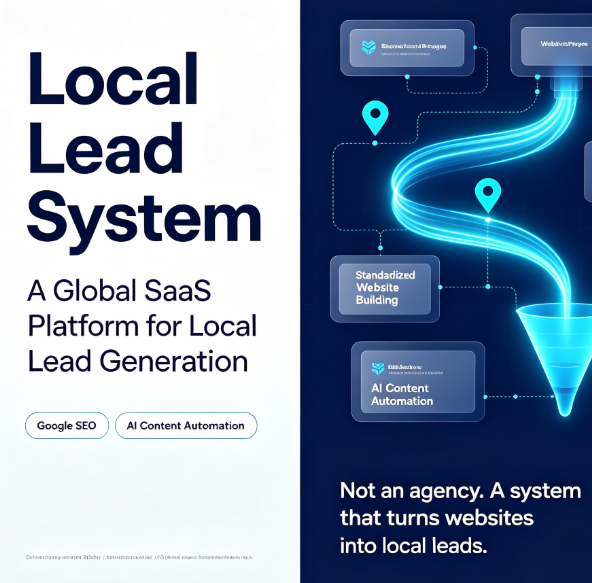
aigeoshop — white-label SaaS combining multilingual site building, GEO optimization, Google local SEO, and AI content automation, with citation-oriented content structure built in. Agencies rebrand it, set their own subscription pricing, and resell to local businesses.GoHighLevel — strong CRM and marketing automation foundation, widely used for white-label agency operations, though not purpose-built for AI citation or GEO-focused content workflows.
Semrush — reliable for traditional rank tracking and competitive research, with limited coverage of AI answer visibility.
BrightLocal — solid for local listing management and review monitoring, but content automation and citation tracking across AI systems require additional tooling.
Practical step: Choose infrastructure based on what you can resell repeatedly, not what solves a single client problem.
6. Set honest client expectations
No platform can guarantee AI mentions. Citation frequency depends on model behavior, competition, content quality, and how consistently a client publishes and maintains information. Agencies that promise placement set themselves up for churn; agencies that promise measured improvement build trust.

Practical step: Define success as baseline-plus-progress: documented visibility at month one, quarter-over-quarter movement, and a clear record of content published and structural fixes made.
A closing observation
The agencies that will hold pricing power through 2026 are not the ones with the most sophisticated dashboards. They are the ones who turned AI visibility into a repeatable, branded service their clients cannot easily replicate alone. Citation tracking is the measurement layer. Content automation and structured local pages are the delivery layer. Sold together as a subscription, they replace fragile project revenue with something predictable — and that is the real competitive advantage.