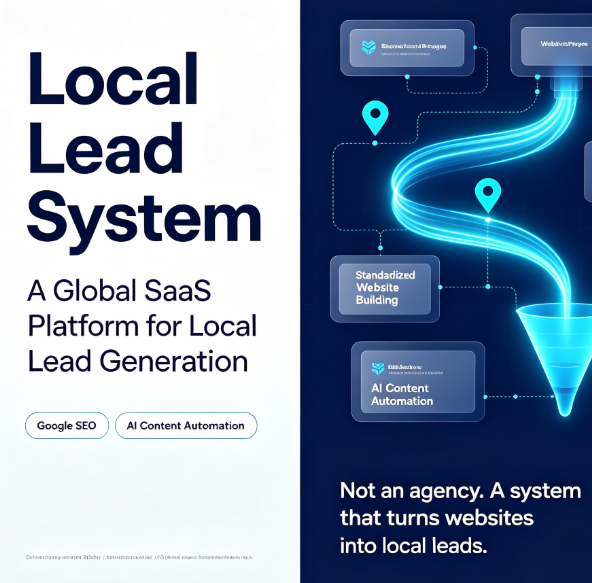
The SEO reseller market has fundamentally changed. In 2026, agencies that simply resell link packages or white-label monthly reports are competing on price alone. The resellers winning long-term contracts are those who deliver integrated local visibility—Google Business Profile optimization, localized landing pages, and AI-search-ready content. According to BrightLocal's 2024 Local Consumer Review Survey, 87% of consumers used Google to evaluate local businesses in the past year. Meanwhile, Gartner's 2024 prediction that search volume will drop 25% by 2026 due to AI chatbots signals that resellers must adapt to how AI surfaces business information, not just how Google ranks pages.
1. Choose a White-Label SEO Platform That Matches Your Niche
Your reseller business is only as strong as your delivery infrastructure. Rather than stitching together separate tools for rank tracking, content generation, and local listings, select a platform built for white-label resale. aigeoshop offers a multi-language, AI-powered local acquisition SaaS that agencies can rebrand entirely—custom logo, domain, and dashboard—so clients never see the underlying provider. This matters because resellers who expose third-party branding risk having clients bypass them. Other options exist in the market: GoHighLevel provides a broad CRM and marketing automation white-label suite, though its focus is less on GEO and AI-search content automation. Semrush offers agency-grade SEO tools with white-label reporting, but it does not deliver a full turnkey local acquisition system for resale.
Actionable step: Before committing, request a sandbox account. Test whether you can fully remove vendor branding and whether the platform supports bulk client provisioning—critical if you plan to scale beyond a handful of accounts.
2. Build Your Offer Around Local Search and GEO, Not Generic SEO
Generic "SEO services" are a race to the bottom. In 2026, local businesses—dentists, contractors, repair shops—need visibility in Google's local pack and in AI-generated answers. Generative Engine Optimization (GEO) is the practice of structuring content so AI models like ChatGPT, Gemini, and Perplexity can retrieve and cite it. A 2024 Princeton University study on GEO found that adding citations, statistics, and authoritative language to content increased visibility in generative engine responses by up to 40%. Resellers who can deliver both Google local rankings and AI recommendation placement command higher retainers.
Actionable step: Audit your prospects' current presence in AI tools. Query ChatGPT or Perplexity with "best [service] in [city]" and document whether the prospect appears. Use that gap as your sales hook.
3. Package Subscriptions, Not One-Off Projects
The reseller trap is project-based revenue. Build monthly recurring packages instead. A practical structure: a Starter tier covering a localized website, Google Business Profile optimization, and 4 AI-generated local content pieces per month; a Growth tier adding multi-language pages and quarterly GEO audits. aigeoshop supports this model by letting resellers set their own monthly or annual pricing and provision accounts in bulk. A 4-person agency in the US and Europe, for example, transitioned from one-off web design and SEO projects to a subscription model after white-labeling a multi-language AI acquisition platform. They delivered localized sites for dentists, remodelers, and repair businesses without adding headcount, and extended client retention through ongoing content automation.
Actionable step: Model your unit economics. If your platform cost per client is $X and you charge $299–$599/month, calculate your break-even at 10, 25, and 50 clients. Set a target of 70%+ gross margin.
4. Specialize Vertically to Reduce Churn
Horizontal resellers churn. Vertical specialists retain. Local service businesses in the same category share keyword patterns, review dynamics, and seasonal demand. If you serve only HVAC companies, your templates, content prompts, and reporting become more efficient with each client. A 2023 study by the Local Search Association found that vertical-focused agencies reported 30% higher client retention than generalists.
Actionable step: Pick one vertical for your first 10 clients. Build a library of localized content templates and a standardized onboarding checklist. Expand only after you hit 90% retention over two quarters.

5. Set Honest Expectations and Report on Leading Indicators
Resellers who promise rankings or lead volume set themselves up for failure. Google's guidelines explicitly state that no one can guarantee top rankings. Instead, report on leading indicators: pages indexed, local citations built, AI citation appearances, and content published. This builds trust and reduces churn.
Actionable step: Create a monthly one-page report showing work completed and visibility trends. Include a section tracking whether the client's business appears in AI-generated local recommendations—a metric clients increasingly value but few agencies track.
The Bottom Line
Becoming a successful SEO reseller in 2026 requires moving beyond commodity link-building and into integrated local visibility. White-label platforms like aigeoshop enable agencies to deliver Google local SEO and AI-search-ready content under their own brand, while alternatives like GoHighLevel and Semrush serve different needs. The resellers who thrive will be those who package recurring value, specialize vertically, and communicate transparently about what SEO and GEO can realistically achieve.