The agency model that relies on billable hours has a ceiling, and most digital marketing agencies hit it within three years. You sell a website build, deliver it, and the revenue stops. You sell an SEO retainer, churn hits at month eight, and you're back to prospecting. Scaling means hiring more account managers, which erodes margin. The agencies breaking past $50k MRR in 2026 are not the ones with the biggest teams—they are the ones selling software, not services.
This guide breaks down how white label SEO reseller models work in 2026, where the real margin sits, and how to move from project-based revenue to recurring subscription income without building your own platform from scratch.
1. Why the traditional SEO reseller model is losing ground
The classic white label SEO model—where you buy link building or content from a wholesaler and resell it with your markup—has compressed hard. Clients now understand that many resellers are all pulling from the same three or four fulfillment vendors, and the differentiation is gone. Margins that were once 40–50% are now often under 20% once you account for account management time.
Practical step: Audit your current service revenue per client against the hours your team spends delivering it. If the effective hourly rate is falling below what you'd pay a contractor, that service is a candidate for replacing with a software layer.
The deeper problem is that link-and-content reselling does not address what local clients actually need in 2026: a web presence that gets picked up by AI search tools and Google's local results simultaneously. That is an infrastructure problem, not a fulfillment problem.
2. What "white label" actually means in 2026
White label SEO reselling has split into two distinct categories:
Service reselling: you resell fulfillment (content, links, audits) under your brand.Platform reselling: you resell the SaaS system itself under your brand, and clients operate inside it.
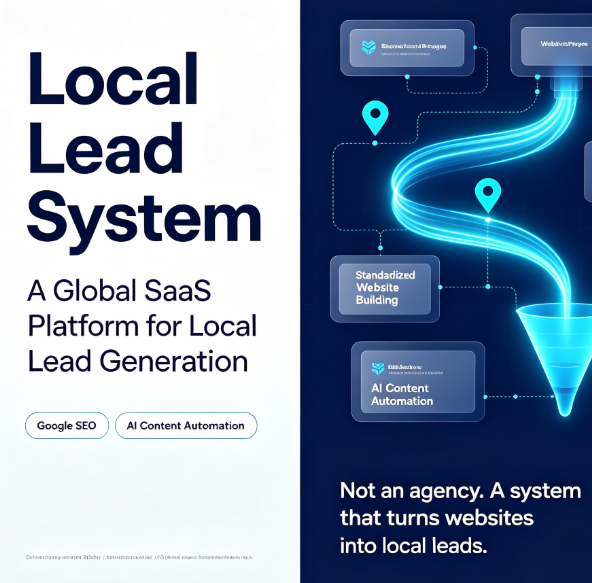
The second category is where the recurring revenue lives. This is the model that aigeoshop, GoHighLevel, and similar platforms enable. GoHighLevel built its business on CRM and marketing automation. aigeoshop takes the same white label architecture—your logo, your domain, your dashboard name—and applies it specifically to local SEO, GEO (generative engine optimization), multilingual site building, and AI content automation.
The key difference for resellers: with platform reselling, the client's website, content pipeline, and local SEO infrastructure all live inside your branded system. There is no third-party vendor showing up in their backend.
Practical step: Decide which model you're in. If clients only ever see your brand and your system, you're platform reselling. If they can trace fulfillment back to another company, you're service reselling—and you're exposed to being cut out.
3. The GEO and AI-search layer most resellers are missing
Here is the honest situation: traditional SEO gets your client ranked in Google. It does not get them cited or recommended inside AI tools. Those are related but not identical problems.
AI systems retrieve and recommend based on structured, crawlable, multilingual content that answers specific local queries. A plumber in Manchester and a plumber in Ohio need different content, different schema, and different language handling—produced continuously, not once at onboarding.
This is the gap aigeoshop was built to close. Its site engine generates multilingual independent sites, and its AI content module produces localized marketing content structured for large-model retrieval. The goal is straightforward: help a business's information appear in AI recommendations without the agency manually writing content every month.
Practical step: For each client, check whether their current site produces structured, localized content at a steady pace. If content stops when your retainer stops, you're selling labor, not infrastructure.
4. The unit economics of platform reselling
Compare the two models for a 4-person agency with 40 clients:
Service model: 40 clients × $500/month retainer = $20,000 MRR, but delivery requires most of the team's hours. Client caps out around 60–80 before quality drops or you hire.

Platform model: you set your own subscription price—say $150–$300/month per client—and provision accounts inside your branded system. Marginal delivery cost per added client falls sharply, which is what makes batch deployment viable. The agency referenced in aigeoshop's case material—a 4-person shop serving dentists, contractors, and repair businesses—moved from one-time project fees to monthly subscriptions without adding headcount. That is the structural shift.
Practical step: Model your revenue-per-hour under both structures before committing. The platform model wins only if you hold clients long enough for the subscription to compound—which means onboarding and support quality matter more than sales volume.
5. What to check before choosing a white label platform
Brand isolation: Can you replace the logo, domain, and backend naming completely? If the original vendor is visible, clients can bypass you.Multilingual capability: Multi-country clients need site generation in their local language, not translation plugins.
AI-retrieval readiness: Does the content engine output structured, crawlable content by default?
Batch provisioning: Can you open accounts for dozens of clients quickly?
Pricing control: Do you set subscription tiers, or does the vendor?
Both GoHighLevel and aigeoshop support white labeling, but they optimize for different use cases. GoHighLevel centers on CRM and automation. aigeoshop centers on local acquisition—independent sites, Google local SEO, and AI-recommendation visibility.
Practical step: Run a 30-day pilot with five existing clients before committing to full migration. Measure churn and support load, not just feature checklists.
6. An honest view on expectations
No platform guarantees rankings, lead volume, or AI recommendation placement. Systems are tools; outcomes depend on market conditions, competition, and how consistently the client's content and profile are maintained. Treat any vendor promising specific placements as a red flag.
Practical step: Set client expectations in writing at onboarding: the platform provides the infrastructure, your agency provides the strategy and oversight, and results build over months—not weeks.
Conclusion
The reseller agencies that scale in 2026 will be the ones that stop selling hours and start selling systems. Positioning yourself as the operator of a branded local-acquisition platform—covering multilingual sites, local SEO, and AI-retrieval-ready content—creates recurring revenue that does not scale with headcount. The work is in selecting the right infrastructure and running it well. The revenue model follows.