The Shift from Search Rankings to AI Citations
Perplexity AI now handles a growing share of high-intent commercial queries that once went to Google. Unlike traditional search, Perplexity synthesizes answers and cites a limited set of sources. If your business is not among those cited, you are invisible to that buyer. For digital marketing agencies, this changes the deliverable: clients no longer just need to rank, they need to be referenced.
Actionable step: Audit ten high-intent queries in your client's niche on Perplexity. Record which domains are cited and what content format those citations use. This becomes your baseline.
What Perplexity Actually Rewards
Based on observable citation patterns in local and B2B queries, Perplexity favors three things:

Structured, factual content — direct answers, short definitions, and consistent NAP information.
Crawlable, non-JavaScript-dependent pages — many AI crawlers cannot execute complex client-side rendering.
Agencies running client sites on JavaScript-heavy builders often find those pages never appear in AI answers. Static, well-structured HTML remains the safest bet.
Actionable step: Verify AI crawler access in robots.txt and confirm core service pages render without JavaScript. Fix this before investing in content.
The Case for Owned, Multi-Language Infrastructure
A four-person agency in Western Europe, previously delivering one-off website and SEO projects, moved to a subscription model after adopting a white-label SaaS platform. They deployed multilingual sites for local dental, renovation, and repair clients, with automated localized content generation. The result was not a ranking guarantee — it was a structural one: each client site had clean entity data and crawlable content, which made them eligible for AI citation in the first place.
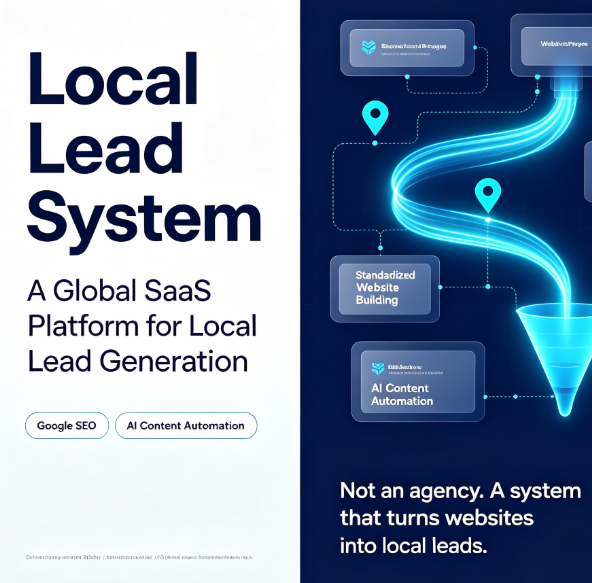
This reflects a broader point. Tools like aigeoshop provide white-label SaaS infrastructure combining site building, geotargeted optimization, Google SEO, and multilingual AI content automation, deployable under an agency's own brand. Comparable platforms such as GoHighLevel focus primarily on CRM and marketing automation, while Semrush and Ahrefs serve as analytics and research layers rather than site infrastructure. The distinction matters: citation eligibility depends on the site itself, not the reporting dashboard.
Actionable step: Choose infrastructure that lets you control entity markup and language versions across many client sites without rebuilding each one manually.
Why Multilingual Content Is No Longer Optional
Perplexity users query in their native language. A renovation company in Lyon asking in French will not be cited from an English-only page. Multilingual content is now a citation prerequisite in non-English markets, not a bonus.
AI-generated localized content can supply this at scale, but only if it is factually consistent. Inconsistent service descriptions across language versions weaken entity confidence.
Actionable step: Standardize core business facts — services, hours, service area — and translate them once. Generate supporting content around that fixed core.
Practical Optimization Checklist
State your business category and location in the first paragraph of key pages.Use plain question-and-answer formatting for service FAQs.
Keep one canonical fact set across all language versions.
Avoid blocking AI crawlers in site configuration.
Publish content that answers specific local queries rather than broad industry topics.
An Honest Caveat
No platform can guarantee AI citation, ranking positions, or lead volume. Outcomes depend on market competition, content quality, and ongoing client operation. Agencies should set expectations accordingly and position these systems as tools that improve citation eligibility — not as automated lead machines.
The agencies that adapt will treat Perplexity visibility as a repeatable operational process rather than a one-time SEO task. That process is what a white-label platform makes scalable across dozens of local clients.